
Our Noble Selves is a delightful comic novel, one that only Kate Atkinson can write. While crimes do occur, the primary “action” surrounds the formulation and execution of 1951’s “Festival of Britain,” a grand, post-war, feel-good bash. It’s a major effort to lift the UK out of the doldrums following the trauma and destruction of WWII.

Our protagonist, Harry Flynn, had been a journalist, a “temporary foreign correspondent” turned war correspondent in Asia, who returned home in tatters, both physically and mentally. It is 1949, and post-war malaise still hovers over the country.
Like many who experienced the upheaval of being in a war, Flynn is looking for “… a place of safety – an “ordinary” life, or what, in his tender state, he had imagined was ordinary. The healing refuge of a wife, a house, a child, perhaps a dog, and a lawn to mow at the weekend – aspirations to suburbia that he hadn’t found time to contemplate before the chasm of war.” When he meets Ivy Shears, a widow, at a bar he thinks he‘s found the perfect match.
By six months, however, the marriage is on the rocks and one day Flynn heads to work – and never comes back. On a park bench he encounters an old boss, Gerald Barry, an editor at a newspaper who invites him to “come and work for me.” But it’s not a journalism job, it’s as a copywriter for the British government’s “Festival of Britain”: set for the summer of ’51, it’s to be “(a) series of temporary exhibition structures—some innovative architecture – Science, Invention, History – the Land and the People, that sort of thing.”
Flynn’s initial reaction is that the whole endeavor sounded “rather dreary, almost pious.” But according to Barry, the younger generation’s “… creativity’s been stifled by the war. They look to Scandinavia these days, you know. Functional –- clean lines. Simple and uncluttered. That’s the future. Not the fusty hodge-podge that passes for style in Britain.” But when Barry says he needs “caption-writers and scriptwriters” Flynn decides to go for it.
So, Flynn settles in, along with a small staff: the “Boy,” a 14-year-old not-too-worldly teen, a fellow called “Badger” with a mysterious past, and a former Welsh minister named Evans. As the preparations ramp up, so does Atkinson’s affection for her characters. A call has gone out to the public, asking for “interesting and unusual objects and ideas” for a part of one of the Fair’s buildings, “Eccentric’s Corner.” This “resulted in a deluge of oddities that no one knew what to do with, most of which seemed to find their way to the basement …”
“Some of the larger “Eccentricities” as they referred to them, such as a “collapsable rubber bus” …. had luckily never made it past the in-tray of written submissions, although the eternally mysterious “smoke-grinding machine” had been welcomed, if only because no one could imagine how it worked or what it was for.”
Badger, “inclined to whimsy, had been so captivated by the idea of “a model of the South Bank site (the Fair’s location) composed entirely of soft toilet rolls” that he encouraged it into the building and displayed it in their office, where it took up an enormous amount of room. Fortunately, the soft rolls were such a novelty that the Boy couldn’t resist, and, one by one, the citadel was quietly dismantled and peddled by him to the occupants of the other offices.”
The “eccentric” rejected offerings also include a donation from a hospital of “604 gallstones arranged in the shape of the Festival emblem.” Poor Badger strikes out again, lamenting that the gallstones were “All from one patient.”
As the Festival winds its way to fruition, Flynn dates a gloomy French woman, Delphine, whom he doesn’t know well. The date is a bust and at one point in the evening, Delphine claims “they” are after her, and planning to “sacrifice” her. Flynn has no idea who or what she’s talking about. She leaves; he keeps drinking at the bar they were in. The next morning when he is preparing to shave, he realizes he has a black eye. Again, he has no idea how or why. Soon we learn that Delphine has disappeared. While Flynn isn’t accused outrightly, he’s the only plausible suspect in her disappearance.
Quirky – yet believable – personalities abound in the story, none more memorable than Mitzi Blinkhorn. The Festival has a contest to see who can bake the best cake, and Mitzi wins, leaving the Festival organizers aghast. Atkinson captures the outraged response beautifully. “It was an extraordinarily bombastic affair, reminiscent of a cathedral dome and embellished in a baroque manner, swagged and garlanded with icing, studded with angelica and sugared almonds, and dotted with glace cherries in garish traffic light colours.”
And Mitzi herself is quite the spectacle: Again, Atkinson revels in her description of Mitzi. “Her long nails were varnished, some of the varnish chipped, and she sported several rings that looked as if they might easily slip off her fingers and embed themselves in pastry or dough… [She] wore a frilly little pinafore over a green satin evening gown and was adorned with an abundance of costume jewellry. Her hair was gingery and bouffant (possibly a wig) and perched on top of this dubious confection was a ribbon tied in a girlish bow that made Flynn think of a poodle. On the whole, though, she resembled nothing so much as her own god-awful Festival Cake.”
Mitzi and her husband, Archie are a dubious pair and when Flynn is pushed into having dinner with them in their rundown, filthy home, he spots a photo from a party that includes the charming couple and the equally uncharming Oswald Mosley, the era’s prototypical British fascist. Archie is constantly hustling for cash and turns out to possibly be involved in the probable death of Delphine. Archie entices Flynn to enter an apartment to retrieve what turn out to be pornographic photos of Mitzi (who had been a pay-to-play gal), and Flynn idiotically agrees. It’s a mission that goes deeply awry, compounded by the fact that he realizes the apartment belonged to Delphine.
To top it off, Flynn’s ex, Ivy, shows up out of the blue, fobs her daughter and dog off on Flynn and wants a divorce asap. And the Festival job had seemed so low key, so easy.
Flynn’s life becomes very convoluted. Post-war Britain is steeped in political intrigue. He tries to comprehend the situation he’s found himself in – needs to clear his name re Delphine’s disappearance, among other problems, and his quandary is summed up nicely by a woman named Lydia who works for the “Service”. “You’re dealing with something you don’t understand,” she tells him. “Dark arts?” says Flynn? “Politics. Same thing,” she answers.
Atkinson concludes this sparkling excursion to early 50s England with a bang – literally. Don’t miss this, or any of her other books. She is incredibly adept at pulling the reader in, and we are unable to let go until there is no other choice.
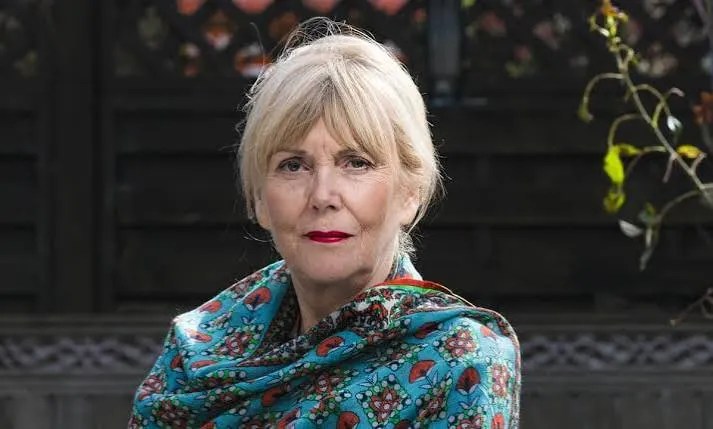


Kate Atkinson and Scenes from The Festival of Britain
Peter Handel has been writing about crime fiction since the early 1990s. His reviews, interviews, and profiles have appeared in the San Francisco Chronicle, the Portland Oregonian, Pages Magazine, Mystery Reader’s Journal, The Rap Sheet and CrimeReads. Join his Substack here.